Shear-driven bacterial conjugation hotspots
Keywords: bacterial conjugation, horizontal gene transfer, encounter rates
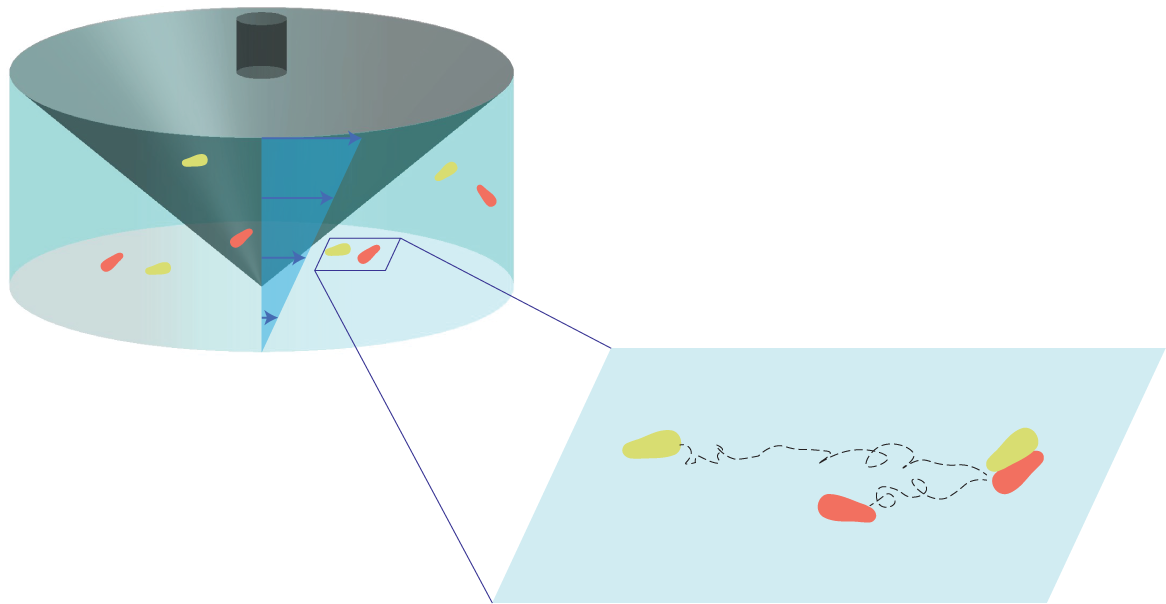
Bacterial conjugation is a process in which bacteria exchange DNA upon contact, which accelerates bacterial evolution, including the spread of antimicrobial resistance. Different environments (aquatic systems, soil, gut) present cells with vastly different encounter rates, setting physical limits on the conjugation rate, but how encounters shape conjugation remained unknown. By using a rheometer as a 'cell collider', we controlled the cell–cell encounter rate and examined how it affects the conjugation rate. Our experiments revealed that optimal stirring increases the conjugation rate fivefold, demonstrating that fluid flow can generate hot spots of conjugation in many environmental settings. Using encounter models, we predict that the ocean surface layer could be a hot spot of conjugation between planktonic cells because the turbulence there is strong enough to increase cell encounters but still weak enough not to impair conjugation.
Chemotactic encounters between bacteria and phytoplankton
Keywords: chemotaxis, encounter rates, bacteria-phytoplankton ineteractions
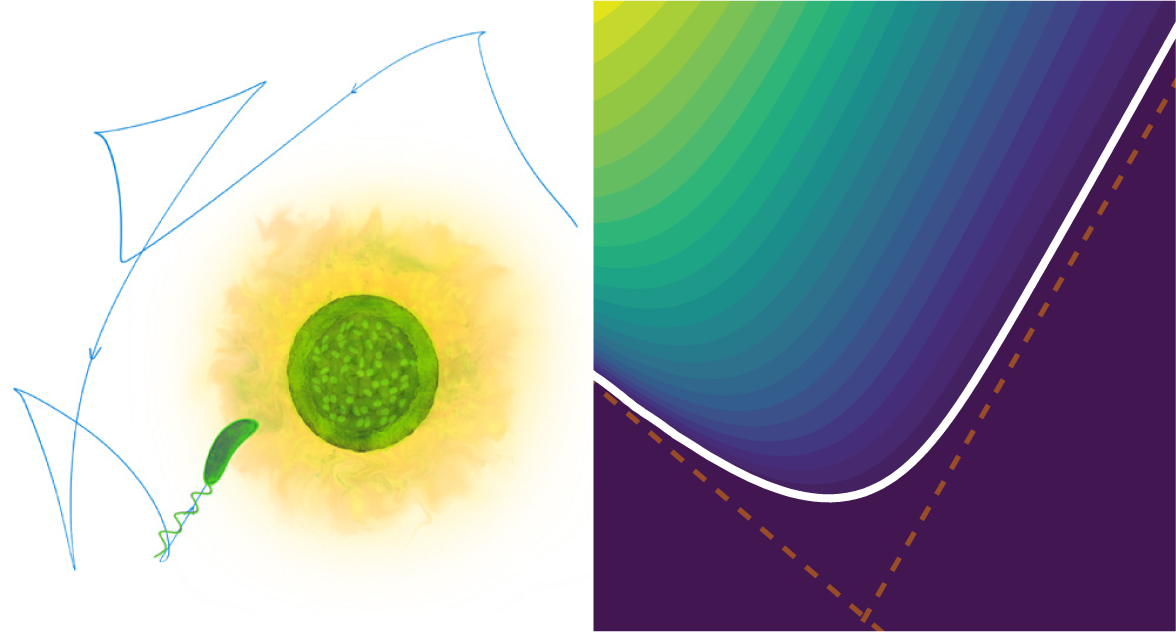
Microscale interactions between bacteria and phytoplankton impact nutrient cycling in the ocean. Chemotaxis can aid bacteria in navigating the gradients of chemicals exuded by phyoplankton cells, yet these gradients can often be noisy, and
the type of noise experienced by chemotactic bacteria depends on the size of the phytoplankton cell. Combining the size dependence of the limits of chemotactic detection and cell–cell encounters, we show that bacteria searching for
phytoplankton can benefit the most from chemotaxis toward small rather than large cells. We also find that fast swimming boosts chemotactic encounters with large phytoplankton, whereas slow swimming boosts chemotactic encounters with
small phytoplankton. This size-dependent asymmetry of chemotactic performance may promote a diversity of search phenotypes in marine bacteria.
Controlled motility in the cyanobacterium Trichodesmium
Keywords: Trichodesmium, aggregation, gliding motility
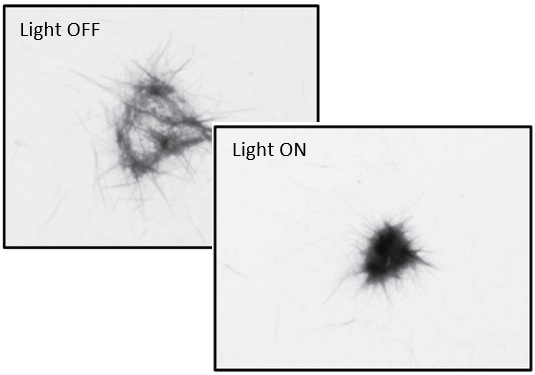
The ocean’s nitrogen is largely fixed by cyanobacteria, including Trichodesmium, which forms aggregates comprising hundreds of filaments arranged in organized architectures. Aggregates often form upon exposure to stress and have ecological and biophysical characteristics that differ from those of single filaments. We found that Trichodesmium aggregates can rapidly modulate their shape, responding within minutes to changes in environmental conditions. Combining video microscopy and mathematical modeling, we discovered that this reorganization is mediated by “smart reversals” wherein gliding filaments reverse when their overlap with other filaments diminishes. By regulating smart reversals, filaments control aggregate architecture without central coordination. We propose that the modulation of gliding motility at the single-filament level is a determinant of Trichodesmium’s aggregation behavior and ultimately of its biogeochemical role in the ocean.
Marine snow formation by elongated phytoplankton
Keywords: biological pump, marine snow, encounter rates between sinking rods, collision kernels, turbulence
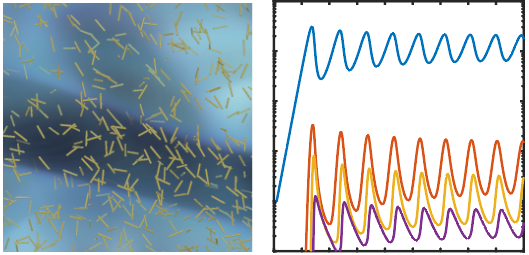
Marine microorganisms control the global biogeochemistry of the oceans through interactions between
individual cells, as prominently exemplified by marine
snow formation by elongated phytoplankton following a phytoplankton bloom. Current models of marine snow formation represent
cells as spheres, yet phytoplankton cells are often highly elongated with
typical aspect ratios of five and greater. To study the effect of elongation on marine snow formation, we recently derived the collision kernels between
identical and dissimilar rods settling in a quiescent fluid and showed that marine snow formation by
elongated phytoplankton can proceed efficiently even under quiescent conditions and that the resulting
coagulation dynamics can lead to periodic bursts in the concentration of marine snow particles.
More recently, in collaboration with Wilczek group, we included the effects of turbulent mixing on encounters and
found that encounter rates between the most elongated cells are up to 10-fold higher than between spherical cells. We predict that
these enhanced encounter rates accelerate marine snow formation and thus offer a mechanistic explanation for the rapid clearance of blooms.
Encounter rates between bacteria and sinking particles
Keywords: microbial ecology, marine snow, encounter rates, hydrodynamic focusing and screening, microswimmers in flow
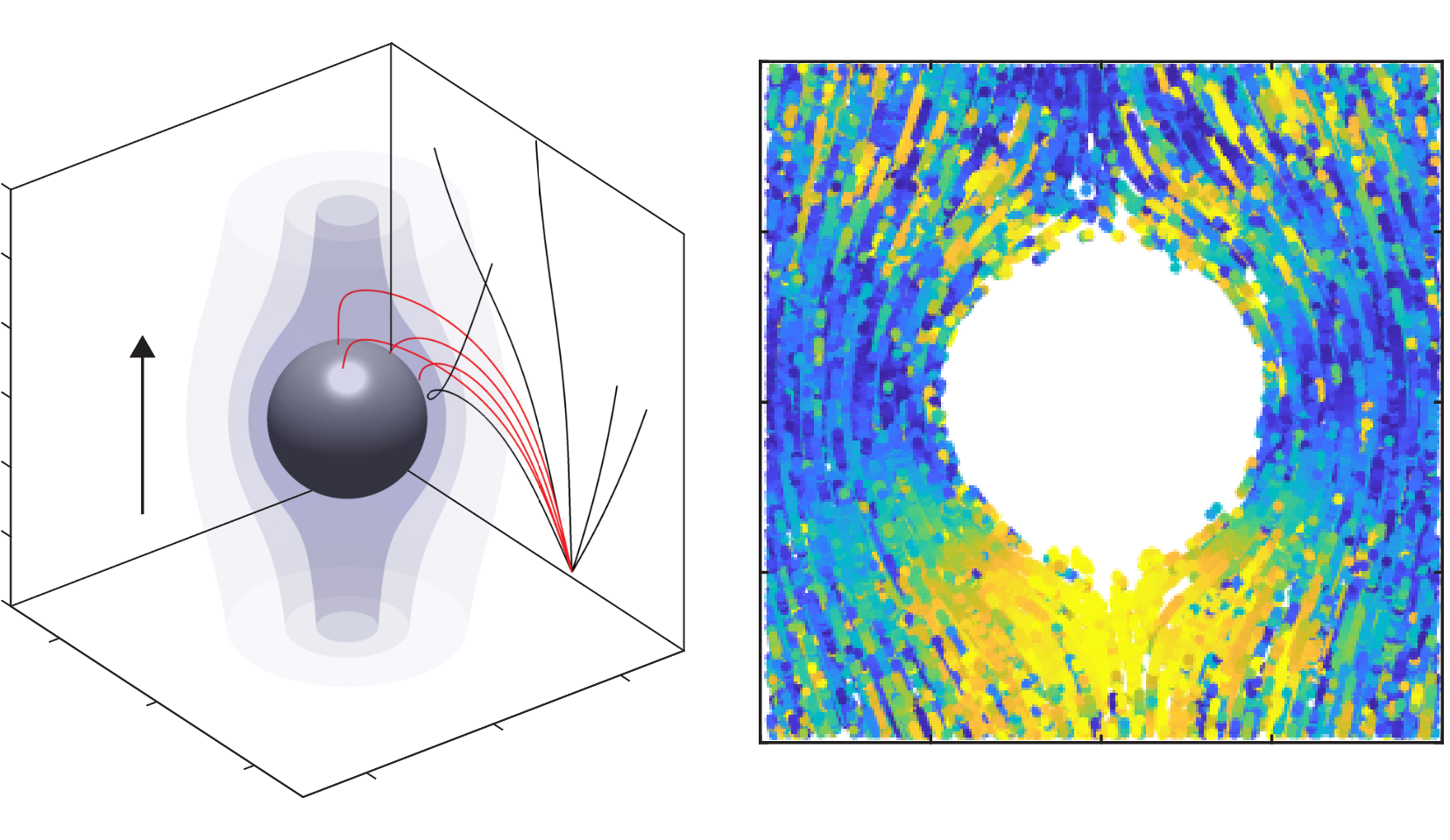
The ecological interaction between bacteria and sinking particles, such as bacterial degradation of marine snow particles, is regulated by their encounters. We analytically and numerically quantified the encounter rate between sinking particles and non-motile or motile micro-organisms in the ballistic regime, explicitly accounting for the hydrodynamic shear created by the particle and its coupling with micro-organism shape. We complemented results with selected experiments on non-motile diatoms. Our results indicate that shear, which leads to hydrodynamic focusing and screening in the bacterium-particle system, should be taken into account to predict the interactions between bacteria and sinking particles responsible for the large carbon flux in the ocean's biological pump.
Spontaneous mirror symmetry breaking in 3D active fluids
Keywords: active fluids, active turbulence, helicity, inverse energy cascade, triadic interactions
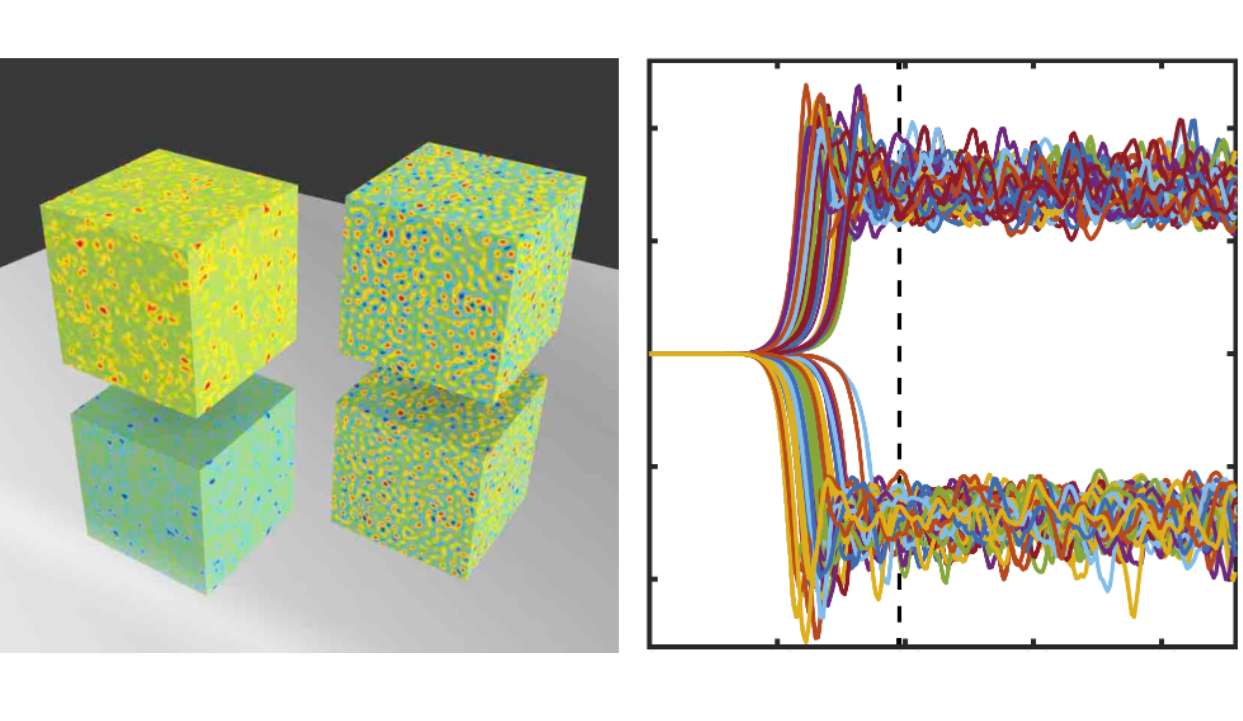
Turbulence provides an important mechanism for energy redistribution
and mixing in interstellar gases, planetary atmospheres,
and the oceans. Classical turbulence theory suggests
for ordinary 3D fluids or gases, such as water or air, that
larger vortices can transform into smaller ones but not vice
versa, thus limiting energy transfer from smaller to larger
scales. Our calculations predict that bacterial suspensions and
other pattern-forming active fluids can deviate from this
paradigm by creating turbulent flow structures that spontaneously
break mirror symmetry. These results imply that the
collective dynamics of swimming microorganisms can enhance
fluid mixing more strongly than previously thought.
Anomalous chained turbulence in actively driven flows on spheres
Keywords: active fluids, active turbulence, anomalous upward energy transfer in 2D turbulence
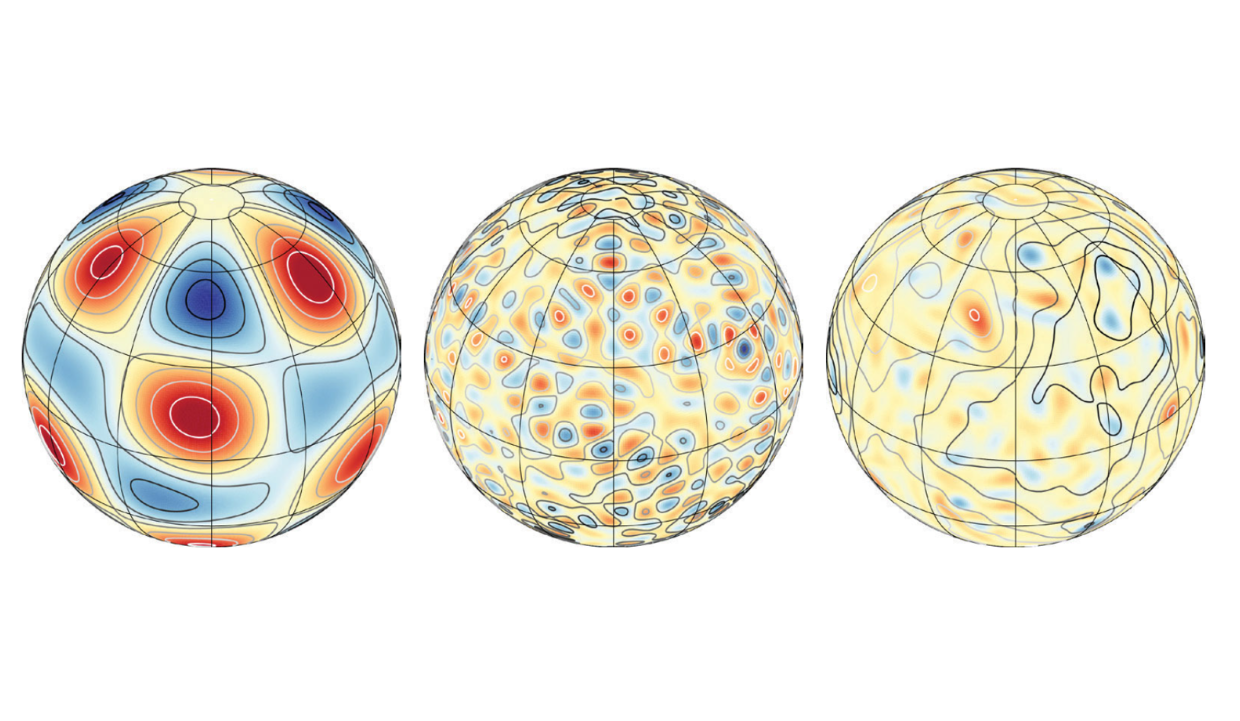
Recent experiments demonstrate the importance of substrate curvature for actively forced fluid
dynamics. Yet, the covariant formulation and analysis of continuum models for nonequilibrium flows
on curved surfaces still poses theoretical challenges. Here, we introduced and studied a generalized covariant
Navier-Stokes model for fluid flows driven by active stresses in nonplanar geometries. The analytical
tractability of the theory was demonstrated through exact stationary solutions for the case of a spherical
bubble geometry. Direct numerical simulations revealed a curvature-induced transition from a burst phase to
an anomalous turbulent phase that differs distinctly from externally forced classical 2D Kolmogorov
turbulence. The coherent motion of the vortex chain network provides an efficient mechanism
for upward energy transfer from smaller to larger scales, presenting an alternative to the conventional
energy cascade in classical 2D turbulence.
Reduction of viscosity and inertia in active fluids
Keywords: active fluids, active fluid-structure interactions, viscosity reduction, Stokes' second problem
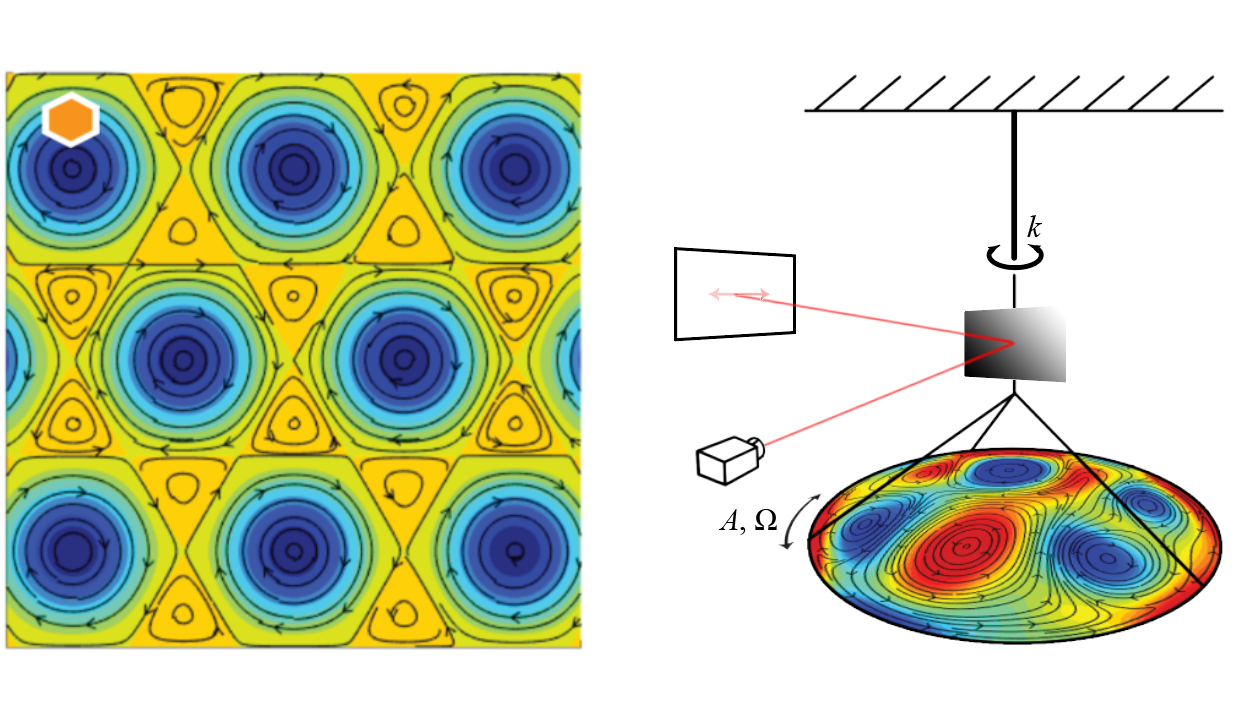
We investigated flow pattern formation and viscosity reduction mechanisms in active
fluids by studying a generalized Navier-Stokes model that captures the experimentally
observed bulk vortex dynamics in microbial suspensions. We presented exact analytical
solutions including stress-free vortex lattices and introduced a computational framework
that allows the efficient treatment of higher-order shear boundary conditions. Large-scale
parameter scans identified the conditions for spontaneous flow symmetry breaking, geometry-dependent
viscosity reduction, negative-viscosity states amenable to energy harvesting
in confined suspensions and reduction of inertia in active fluids coupled to external pendulum. The theory uses only generic assumptions about the symmetries
and long-wavelength structure of active stress tensors, suggesting that inviscid phases and reduction of inertia may
be achievable in a broad class of nonequilibrium fluids by tuning confinement geometry
and pattern scale selection.