We are seeking a postdoctoral researcher for a 2-year position in the project titled "From Coarse Grains to Atoms and Back: A Rigorous Multiscale Modeling Approach to Diffusion Under Macromolecular Crowding". See the announcement here.
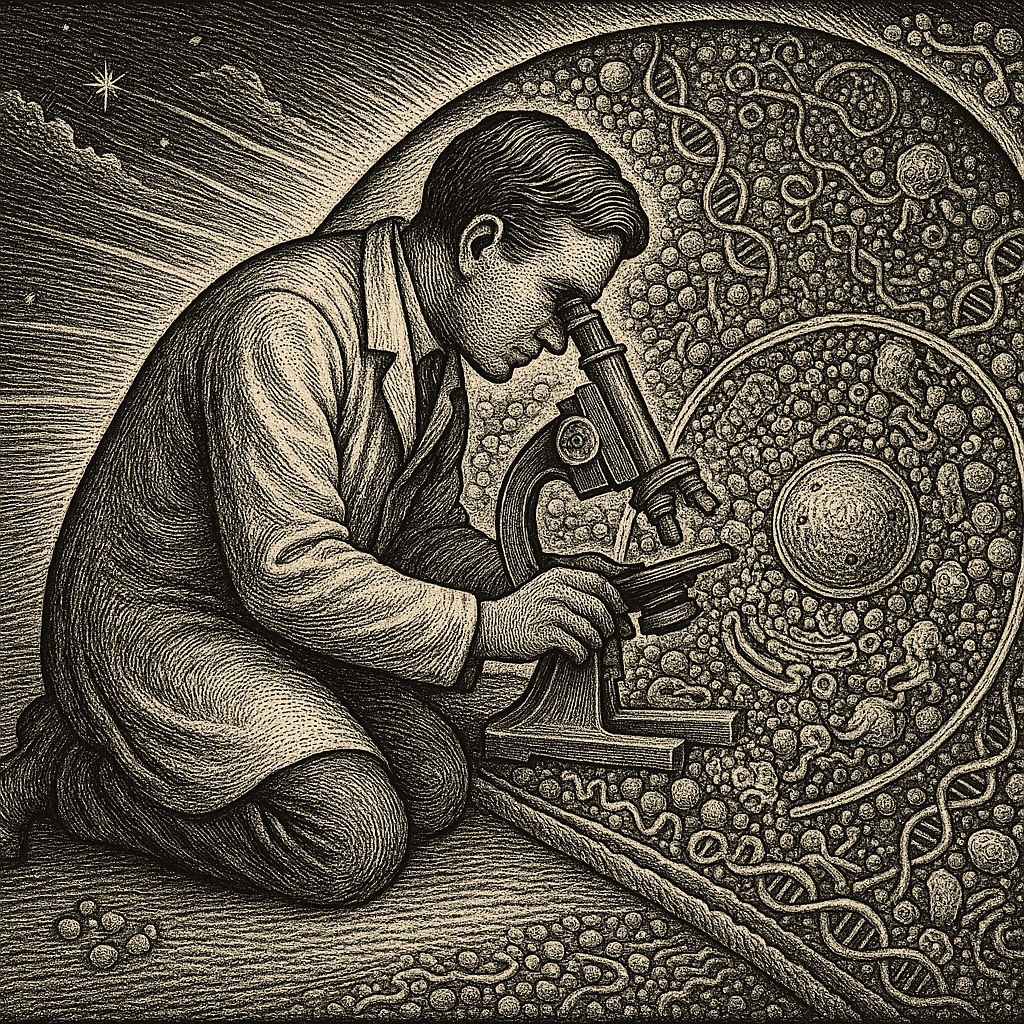
We unravel physical mechanisms of cytoplasm complex dynamics and organization
Our group, a part of the Department of Complex Systems Modeling at the Faculty of Physics, University of Warsaw, performs studies at the intersection of statistical physics and cell biology.
Learn more about our research interests →Main Research Interests
1. Protein Mobility in Crowded Wnvironments
Macromolecular crowding leads to deviations from the classical Stokes–Einstein relation, which relates the diffusion coefficient to the viscosity of the medium: $$D \neq \frac{k_\mathrm{B} T}{6\pi \eta R} .$$ We are interested in why crowding effects in polymeric and protein-rich systems lead to opposite types of deviations from this relation.
2. Dynamic Instability of Cytoskeleton
Microtubules exhibit dynamic instability, stochastically switching between polymerizing and depolymerizing states. These processes generate mechanical forces and enable the performance of mechanical work. We are interested in the molecular mechanisms underlying these transitions, as well as in a thermodynamic description of such polymerization motors.
3. Liquid-Liquid Phase Separation in Cells
The cytoplasm is a multicomponent, multiphase system filled with droplets of diverse composition. Many of these phase equilibria operate near criticality, where fluctuations play a substantial role. We aim to understand this delicate balance using classical thermodynamics, computational simulations, and concepts from percolation theory.
News
Dr. Tomasz Skóra, awardee of the Polish Returns program, joined the Department of Complex Systems Modeling at the Faculty of Physics, University of Warsaw. Here the story of our group begins.
Our Team
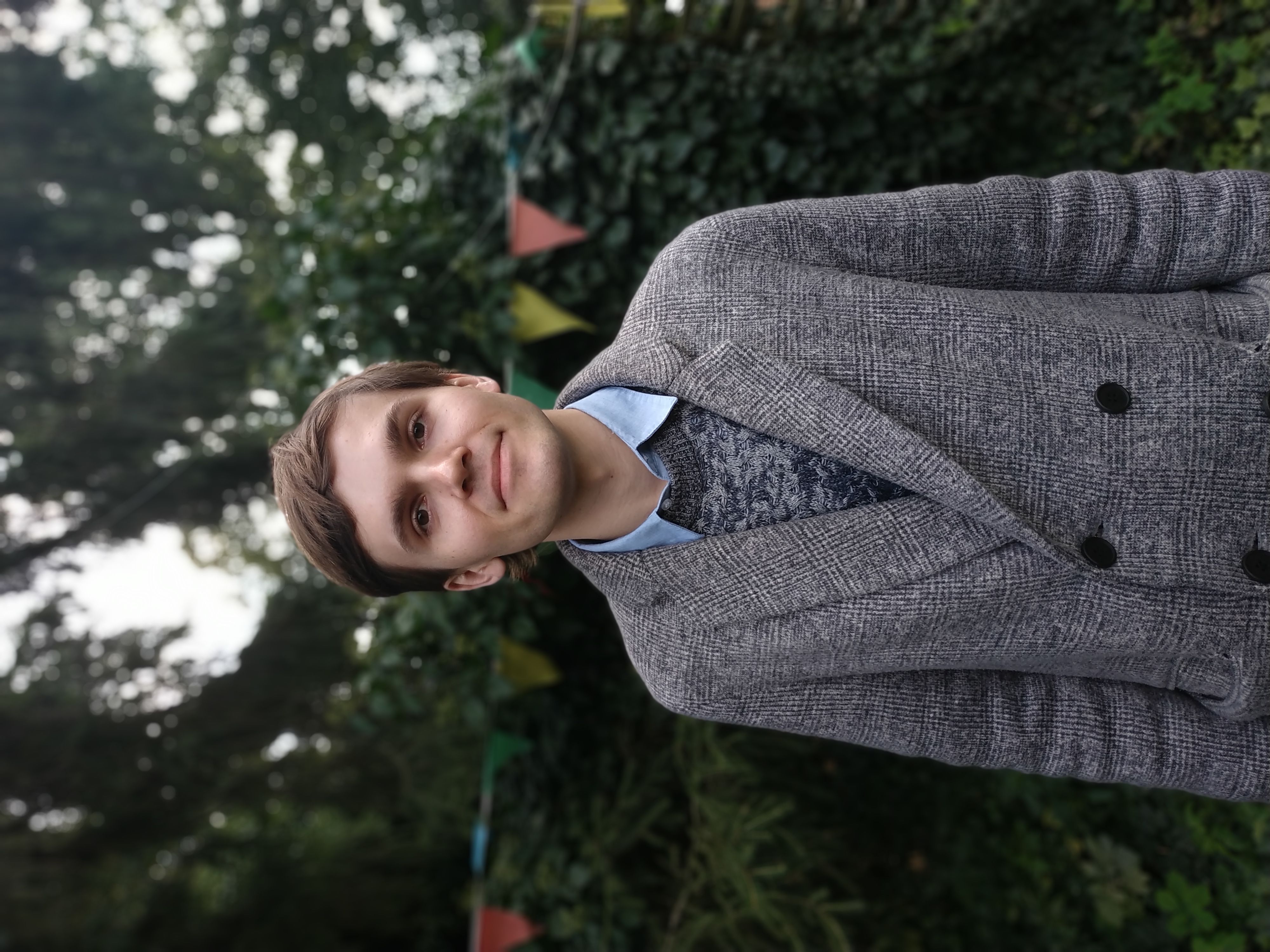
Dr. Tomasz Skóra
Principal Investigator
Expert in Molecular Modeling and Statistical Physics. Leader of the Polish Returns project titled "From Coarse Grains to Atoms and Back: A Rigorous Multiscale Modeling Approach to Diffusion Under Macromolecular Crowding".
Tomasz.Skora@fuw.edu.pl | ORCID | Google Scholar | Research Gate
Selected earlier papers of the PI
These papers have been written, when dr. Tomasz Skóra has been working at the University of Utah (Postdoc) and the Institute of Physical Chemistry PAS (PhD).
- Skóra T., Wu, J., Beckett, D., Xue, W, Voth, G. A.. & Bidone, T. C. On the Curvature and Relaxation of Microtubule Plus-end Tips. Biophysical Journal 125, 406–419 (2026)
- Skóra T., Hastings, E. M., Carney, K. R., Fu, H. C., Bidone, T. C., & Sigala, P. A. Chemical propulsion of hemozoin crystal motion in malaria parasites. Proceedings of the National Academy of Sciences 122(44), e2513845122 (2025)
- Raczyłło, E., Gołowicz, D., Skóra, T., Kazimierczuk, K., & Kondrat, S. Size Sensitivity of Metabolite Diffusion in Macromolecular Crowds. Nano Letters 24, 4801–4809 (2024)
- Skóra, T., Vaghefikia, F., Fitter, J., & Kondrat, S. Macromolecular crowding: how shape and interactions affect diffusion. The Journal of Physical Chemistry B 124, 7537–7543 (2020)
Contact Us
Cytoplasm Dynamics & Complexity Group
room 5.22, Faculty of Physics, University of Warsaw
ul. Ludwika Pasteura 5, 02-093 Warszawa
E-mail: Tomasz.Skora@fuw.edu.pl